

CFO Agent
Agent. Runs the forecast, the close and your board pack.
The cash flow forecast is a skill in Ai1, the AI agent platform by MyZone AI. The CFO Agent runs it from your historical actuals: it projects forward by run-rate, trend or the drivers you choose, shows low, base and high ranges with a confidence for each, and tests what-if scenarios.
The tight weeks, early
You see when cash runs low while there is still time to act.
Ranges you can plan around
Low, base and high outcomes, with low-confidence figures flagged.
Variance explained
Budget against actual is split into price and volume, so you know why it moved.
At a glance
| Built from | Your historical actuals |
|---|---|
| Methods | Run-rate, linear trend or the drivers you choose |
| Shows | Low, base and high ranges, with a confidence for each |
| What-ifs | Scenarios run by changing the assumptions |
| Variance | Budget against actual, attributed to price and volume |
| Run by | The CFO Agent |
| Never | Pays a bill or moves money before a named person approves |
A profitable month can still run out of cash when a big purchase lands with payroll and tax, or when a large customer starts paying late. A single-number forecast hides how sure anyone is. Ranges with a stated confidence show the risk, and what-if scenarios show which action keeps you clear.
How this differs from the CFO Agent as a whole: the agent also processes bills, chases what customers owe and runs the close; this skill is the forecast it keeps current.
How it works
Every figure traces back to its source, and anything that moves money waits for you.
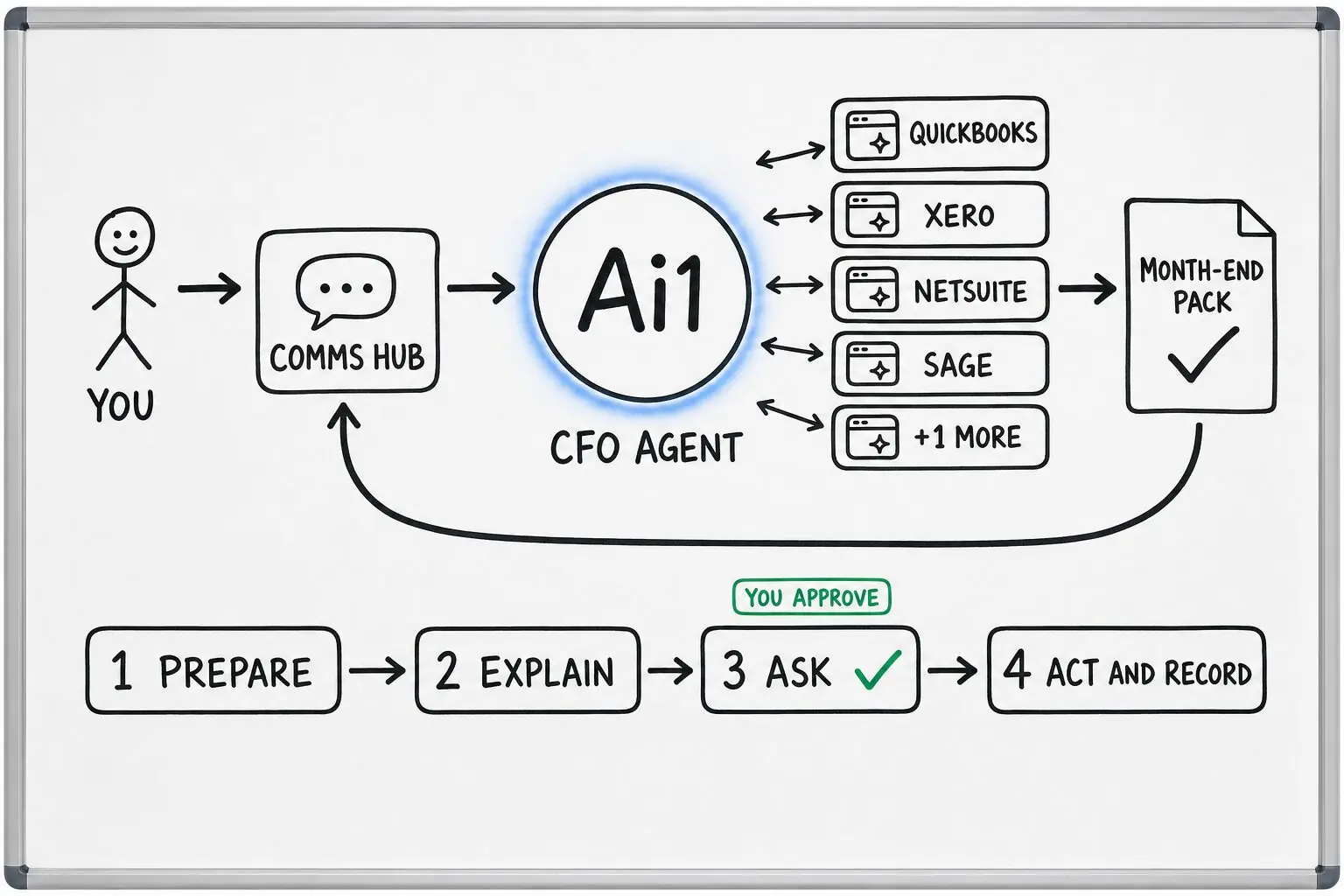
Starts from your historical figures, with read-only access wherever possible.
Builds the forecast by run-rate, trend or drivers, as ranges with a confidence for each.
Runs scenarios, such as a customer paying later, and shows the effect on cash.
You get the tight weeks and suggested actions. Nothing is paid until a named person approves.
Example cash forecast
Example with a fictional business. Names and figures are invented to show the kind of output you get.
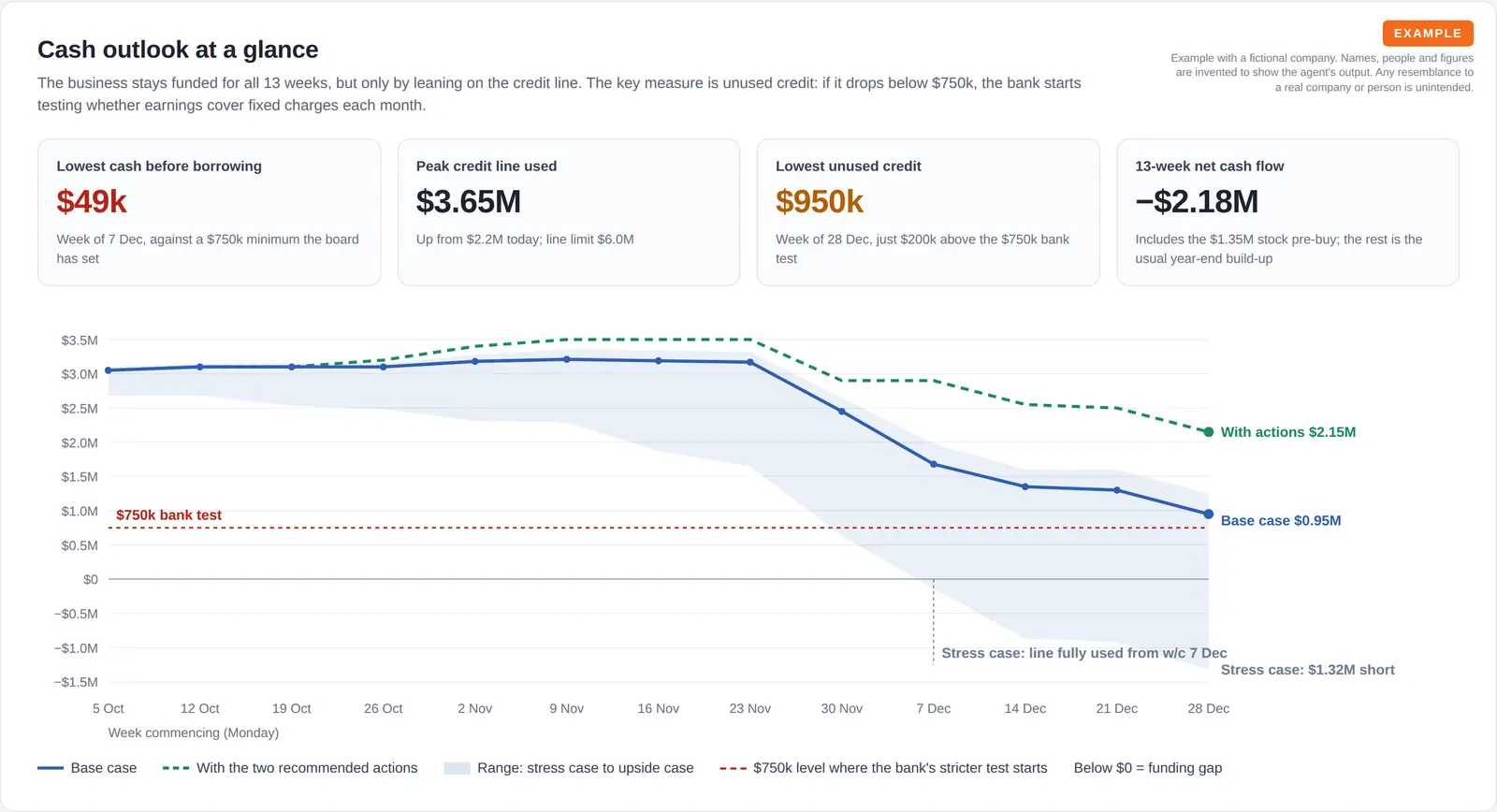
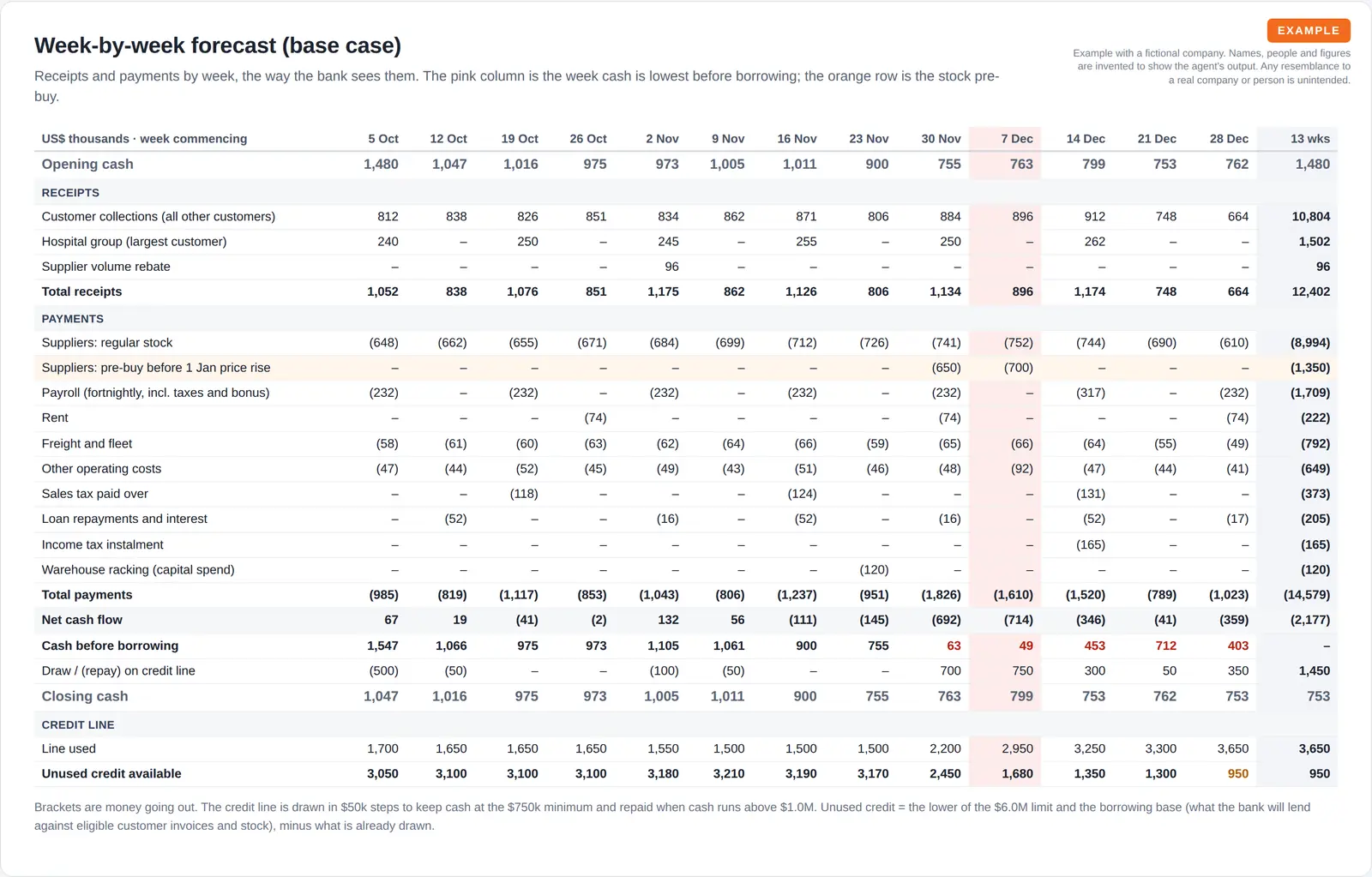
What it was asked: Build a 13-week cash-flow forecast to year-end, tell me where cash gets tight and what we should do about it before I approve the next payment runs.
| Tightest point | Early December. A $1.35M stock pre-buy lands with payroll and tax, so credit line use rises from $2.2M to $3.65M. |
|---|---|
| Late payer | 68 days against 45-day terms from the largest customer; $410k is past due and $180k is disputed. |
| Headroom | $950k of unused credit by late December, only $200k above the bank's test. Two actions keep it above $2.1M. |
Built-in guardrails
How the cash flow forecast keeps you in control of the money.
Better together
The agent that runs this forecast, and the agents and skills it works with.
Agent. Runs the forecast, the close and your board pack.

Agent. Uses your forecasts and scenarios to weigh bigger business decisions.
Skill. Picks up the contract questions that fall outside finance work.
Common questions
Your historical actual figures. The CFO Agent needs read access to your accounting system and bank, and it starts with read-only access wherever possible.
Because no forecast is certain. Each figure is shown as low, base and high, with a confidence that drops when the history is volatile, and low-confidence figures are flagged.
No. It suggests actions and shows their effect. Anything that pays a supplier or moves money waits for a named person on your team to approve it.
We will show you the forecast on sample figures, then talk through what it needs from your books.